


Flights of Fancy
The Marvelo of Monarch Migration
Can you imagine walking 50 to 100 miles in a day? That’s how far monarch butterflies fly every day, as they make their 3000 mile tour north. Even covering that much ground each day, this flight takes so long, it cannot be done in a single generation. It takes the lifetimes of up to 4 monarchs to reach the northern US and Canada.1 That is why it is so crucial that they are able to find gardens with nectar rich flowers to refuel and milkweed nurseries to bear the next generation of monarchs.
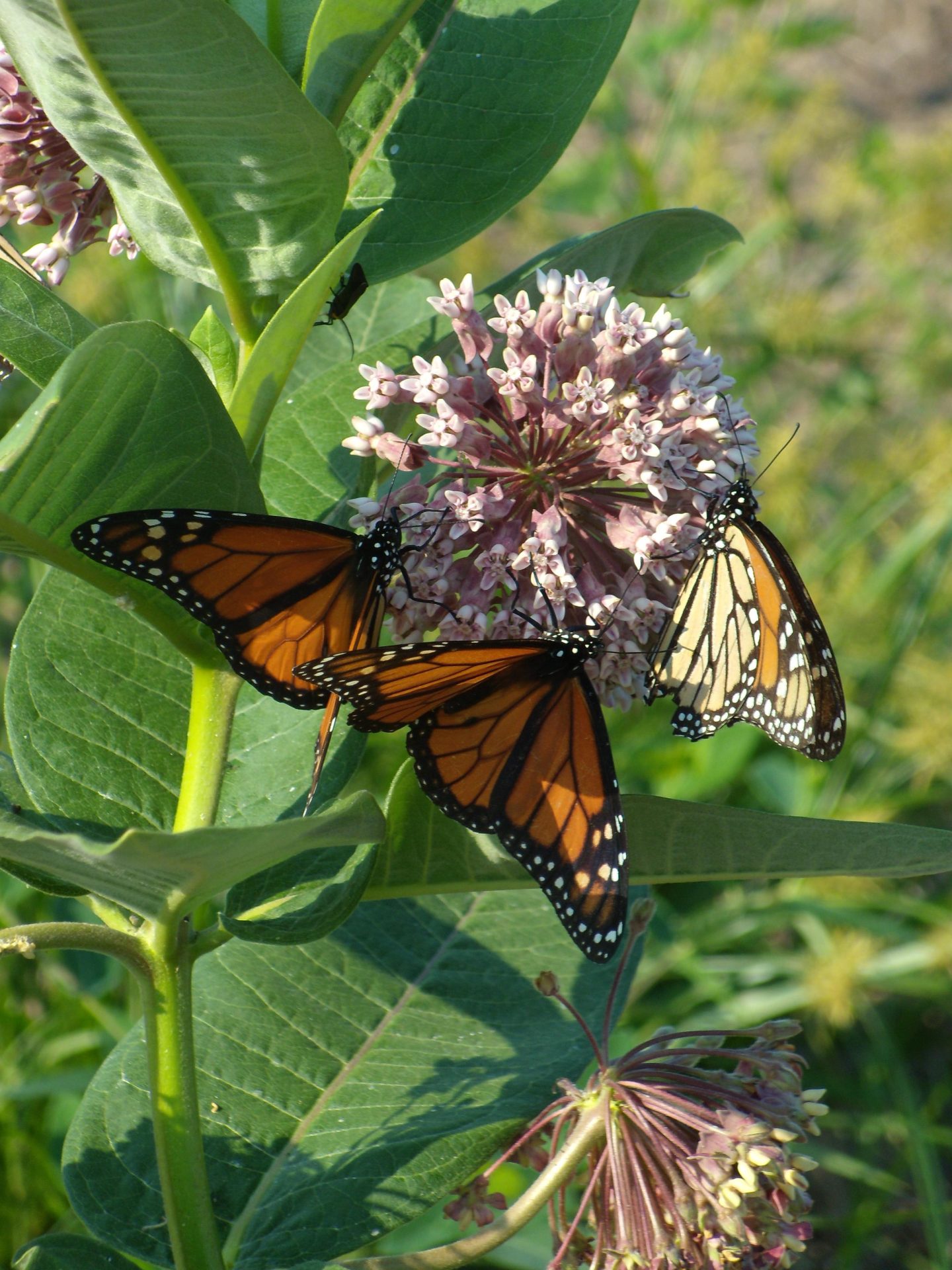
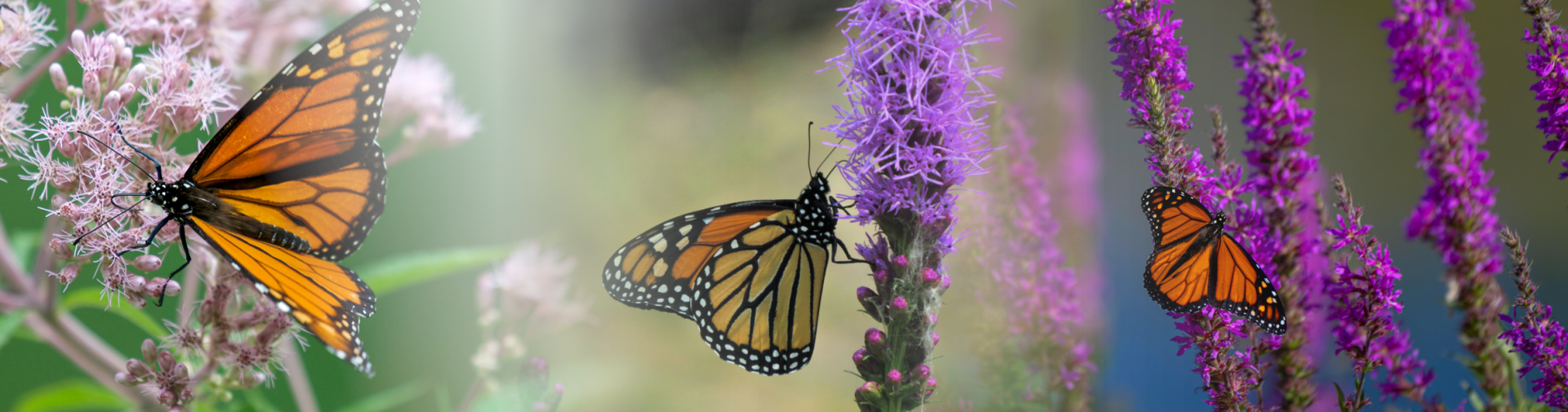
This is Marvelo, Maribelle, & Margarite – I named them
Milkweed is the sole host plant of the monarch butterfly. Meaning it is the only plant on which they can lay their eggs and their young can successfully hatch and grow as caterpillars. Milkweed is critical to monarch reproduction, but milkweed alone is not enough.
Side Quest
Monarchs are headed this way as we speak! You can track their progress here.
Bitter Pills & Acquired Tastes
Monarch caterpillars happily much along on milkweed leaves. As they do it imbues the larval butterflies with the toxin produced in the plants milky sap. This helps both monarch caterpillars and adult butterflies to be less appealing to predators, like birds. It’s sort of like monarchs are superheroes and milkweed nurseries are their origin story. Don’t go thinking you can go all ‘Peter Parker and a spider’ on milkweed though. Milkweed sap is not good to eat for humans, as well as many other animals and insects, but that’s great for monarchs.2 That is what makes the juiced-up monarchs an unappealing snack to predators. Though milkweed does kind of give monarchs superpowers, it’s more likely to give you a stomachache.
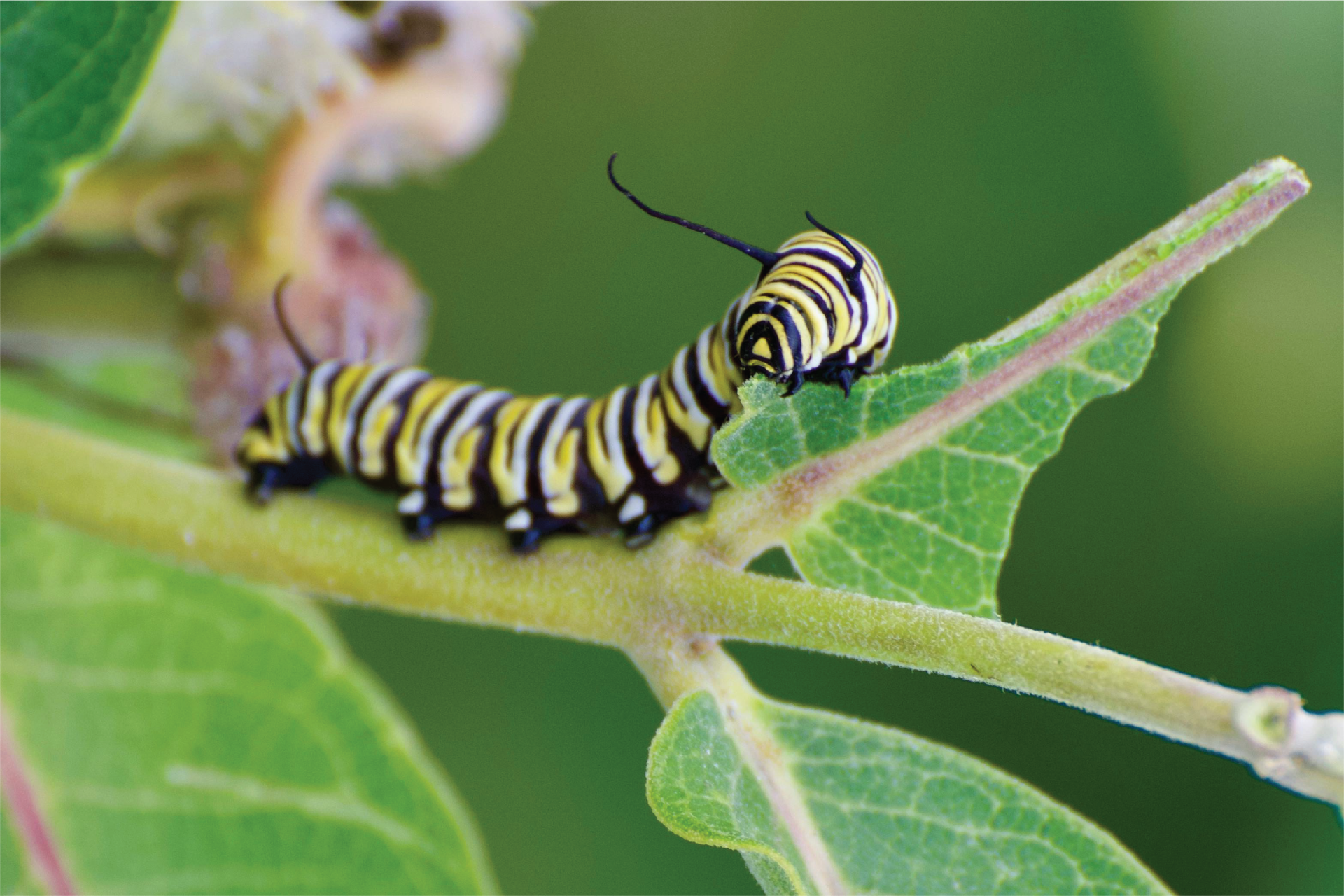
As they transform into adult butterflies however, their tastes change. While adult monarchs will drink the nectar of milkweed plants, it is not their only, or necessarily even their favorite, food source. As the blooms of milkweed only last for 3-4 weeks of the summer, it is important to have a variety of flowers that bloom at different times throughout the season. Doing so can help to ensure there are always ample nectar sources for monarchs and other butterflies to feed on. They feed on the nectar of many types of flowers. Some of their favorites include echinacea, asters, and bee balm.
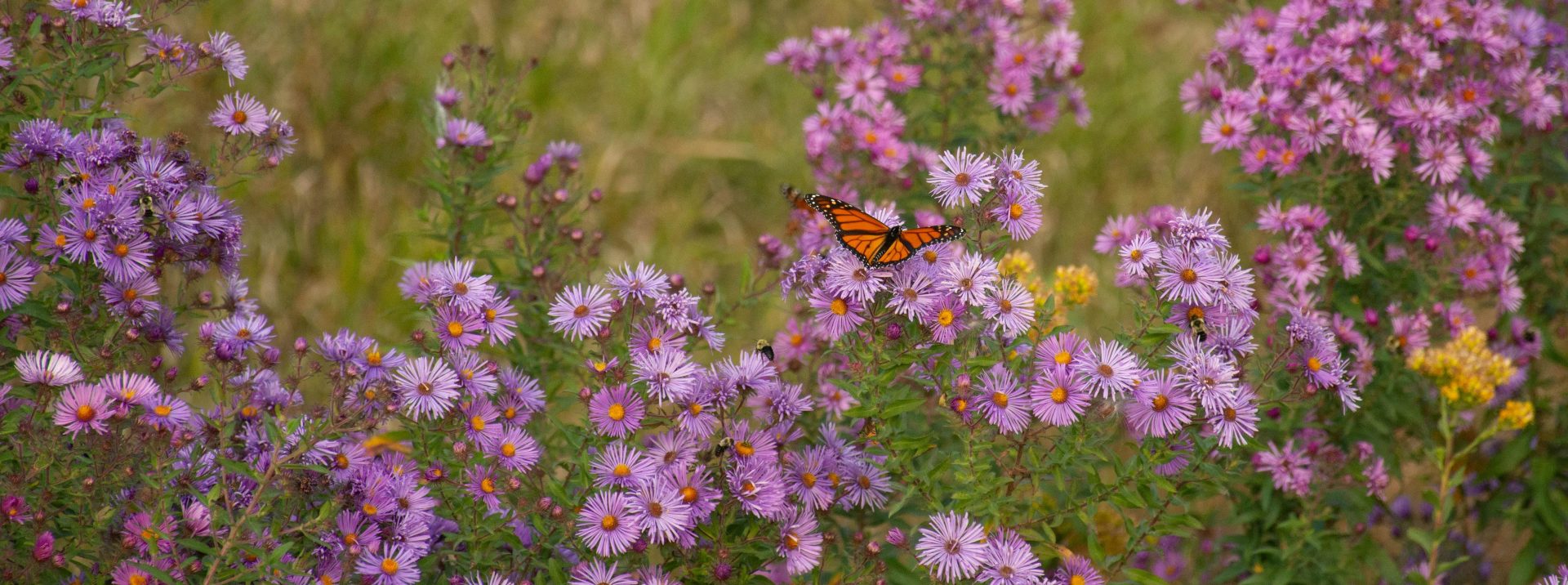
They are also fond of alyssum and pansies, which are important early spring bloomers. They help to sustain the monarchs until the bounty of summer bursts into bloom.
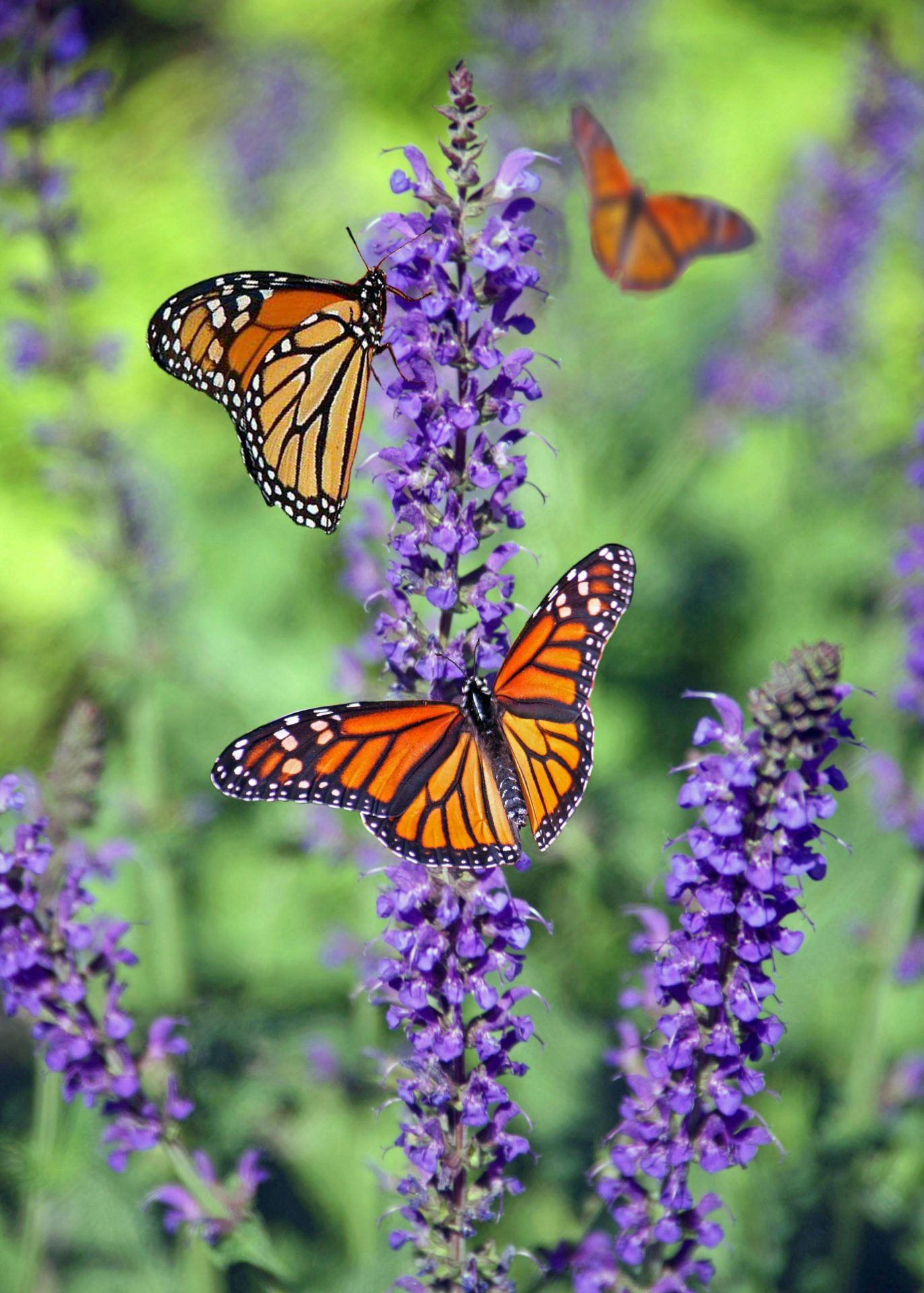
Nectar rich flowers that continue to bloom into fall, such as calendula, gaillardia, salvia, and blazing star are especially important. These flowers will fuel the 4th generation of the monarch as they alone make the entire trans-continental flight south to over winter along the southern United Sates coasts and oyamel fir forests of Mexico.
You can find seed for milkweed and all of our other pollinator favorites here.

- U.S. Forest Service. [n.d.]. Migration and Overwintering. https://www.fs.usda.gov/wildflowers/pollinators/Monarch_Butterfly/migration/index.shtml [Online; accessed 3-April-2026]. ↩︎
- U.S. Fish & Wildlife Service. [n.d.]. Spreading Milkweed, Not Myths. (2021). https://www.fws.gov/story/spreading-milkweed-not-myths ↩︎

Actually, milkweed will NOT give you a stomachache. Milkweed is one of my very favorite wild edibles (been eating it for more than 60 years), because of the good flavor and because it bears so abundantly that I can harvest as much as I can eat and still leave plenty for the wildlife including the monarchs. Once the milkweed starts sprouting in my field I stop mowing in that area. Each perennial plant will produce 6 to 8 flower bud clusters, which means I can harvest the early ones for eating and there will still be lots for the bees of all kinds, the milkweed bugs, and all the insects that come to the milkweed buffet, as well as plenty of flowers to scent the entire field with sweetness for many days. Think of milkweed buds as giant broccoli; all you have to do to eat it is blanch it briefly in boiling water and then prepare any way you would use broccoli. In milkweed and potato soup, with cheese sauce, mixed in a casserole, whatever you like. Milkweed does not require multiple boilings like some people report, and it does not taste bitter. If what you gathered tastes bitter, you have picked the wrong plant–probably dogbane, that looks similar to a lot of people and is the most common plant mistakenly gathered as milkweed. Dogbane WILL give you a stomachache, so be sure of your plant identification before eating wild plants. Never pick the entire shoot tip of milkweed as some (selfish) chefs recommend; it won’t taste any different, once it’s cooked you won’t be able to see that it’s the tips, and picking the entire shoot means you have taken all the potential growth for that season and left nothing for the wild creatures. Don’t be selfish.
Hi Coop,
Thanks for sharing what you know with us. This is why we have made a point not to refer to Milkweed as toxic, poisonous, or inedible. However, since it does require special preparation to be safe for consumption and because individuals with certain sensitivities, like to latex, may also be sensitive to milkweed, we cannot advocate for eating milkweed. We think it is wonderful that you are able to enjoy it in this way and I love how you promote responsible foraging. Just helping to provide for pollinators is enough of a reason for us to love milkweed. It’s wonderful that we are all able to enjoy our gardens in our own way.
if I plant milkweed will I get monarchs’s?
Hi Ric,
While I can’t absolutely guarantee this, it is more likely than not that ‘if you plant it, they will come.’ Monarchs are very attracted to milkweed and very good at finding it. When milkweed is in flower, you may see the adult butterflies lingering around as they drink nectar. When not in flower, the females visits to milkweed plants may be brief but keep an eye out for small white dots that are the eggs she has left behind, attached to the underside of the leaves, and the black, white, and yellow striped caterpillars munching on leaves.