

From Prohibited Produce To The Queen Of Hearts
Fun fact: Marilyn Monroe was the first official Artichoke Queen in 1948.
She wasn’t a star yet, she wasn’t even actually Marilyn, but when Norma Jean was visiting the tiny town of Castroville for the purpose of modeling for a jewelry store, she was picked to represent the up-and-coming crop that would grow to make Castroville the Artichoke capital of the country.
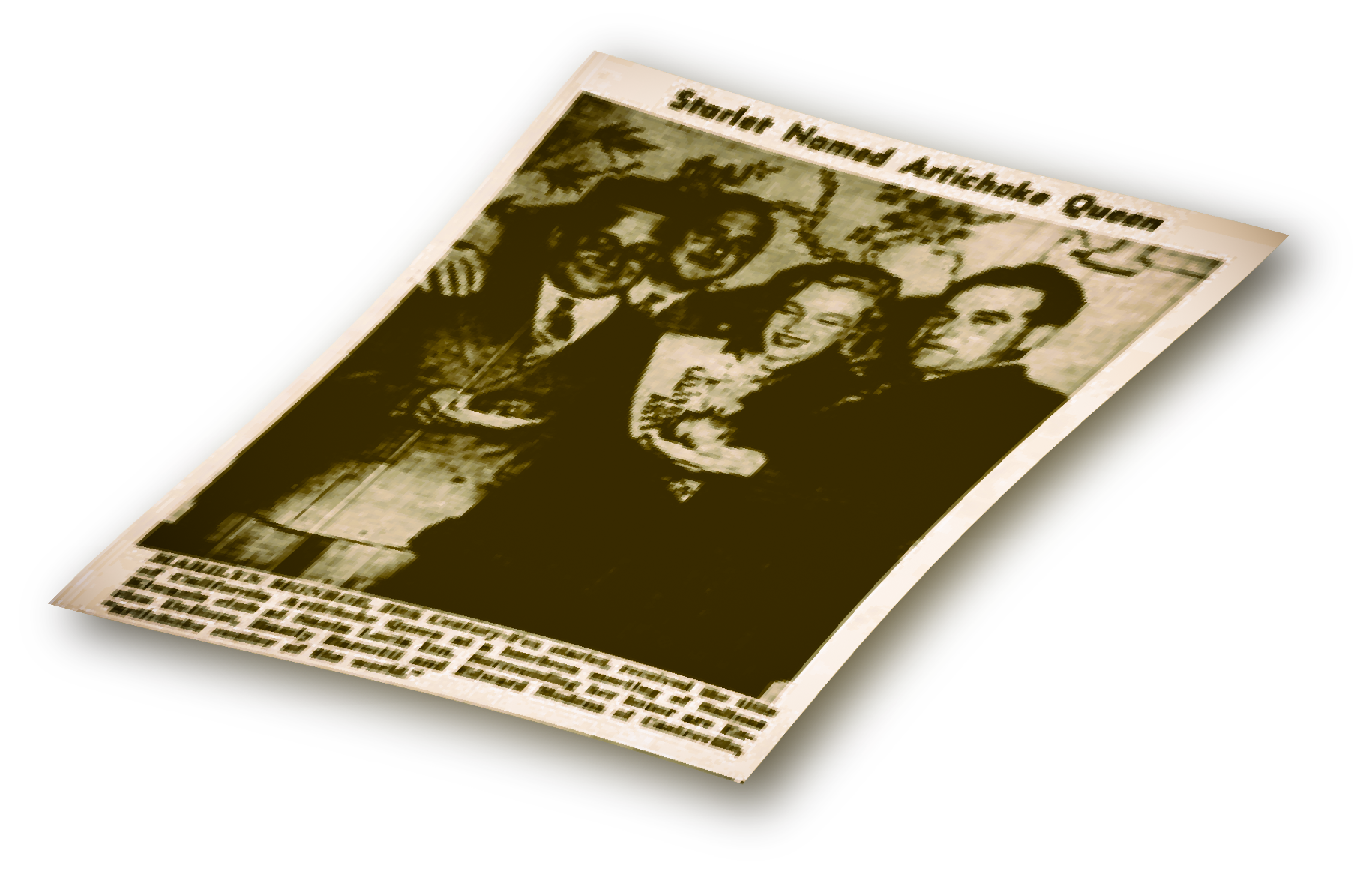
Clipping from The Californian, May 15th, 1948
Coeur d’artichaut? Oui, mon amour.
Coeur d’artichaut translates directly to ‘artichoke heart’ but is used to describe someone who falls in love quickly and easily. A hopeless romantic some might say, but any romance asscociated with artichokes doesn’t seem hopeless to us.
The artichoke doesn’t look like a tasty treat. A descendent of cardoons, and related to the sunflower, it clearly has sharp bits. Who was it that first took the leap and cut past the poky bits, then the hairy bits, to get to the delicious heart inside?
Whomever it was, it was a loooong time ago. It is one of the oldest foods known to humans, cultivated and eaten since ancient Greek and Roman times. It has been grown and consumed in temperate climates for thousands of years, proving its worth as a beneficial health aid, especially for the liver. Cynarin and silymarin compounds stimulate bile production, which sounds gross, but actually gets rid of toxins and helps promote liver cell regeneration.1
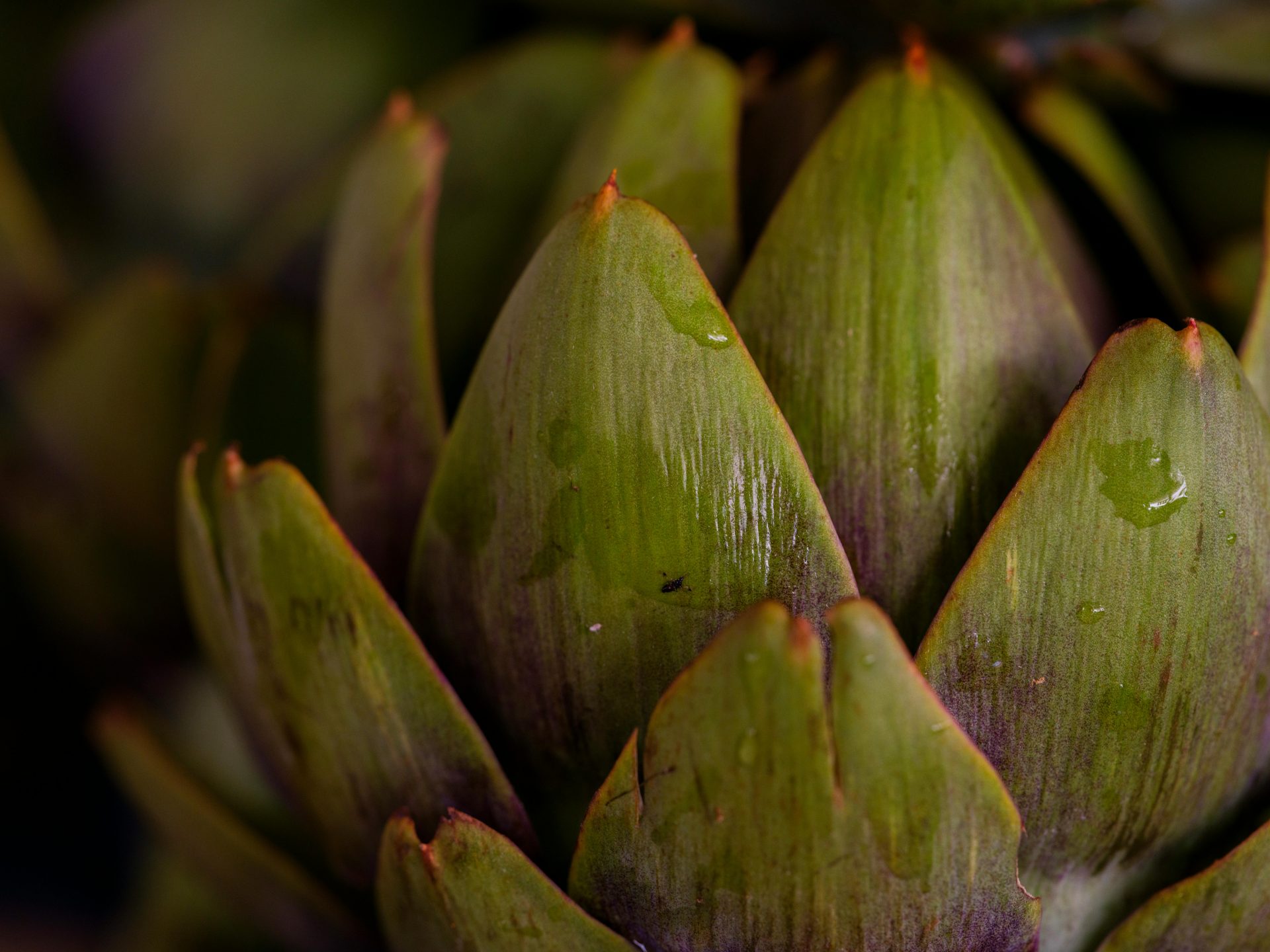
As time went on, the artichoke cemented its place as both exotic and popular across Europe. They were destined to come to the United States, where they would eventually meet their queen. Making their American debut twice–in 1806 the French brought them to Louisiana, while Italians carried these crowns of green with them as they headed west to California. This meeting of land and plant would prove to be a royal pairing. Today the state of California produces the majority of artichokes consumed in the US. Go California!
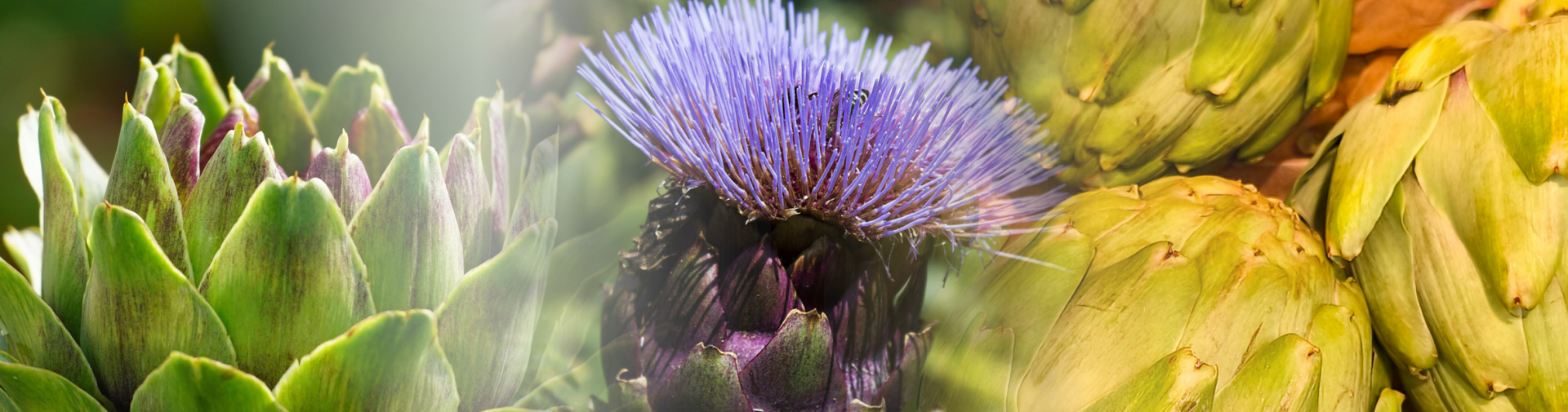
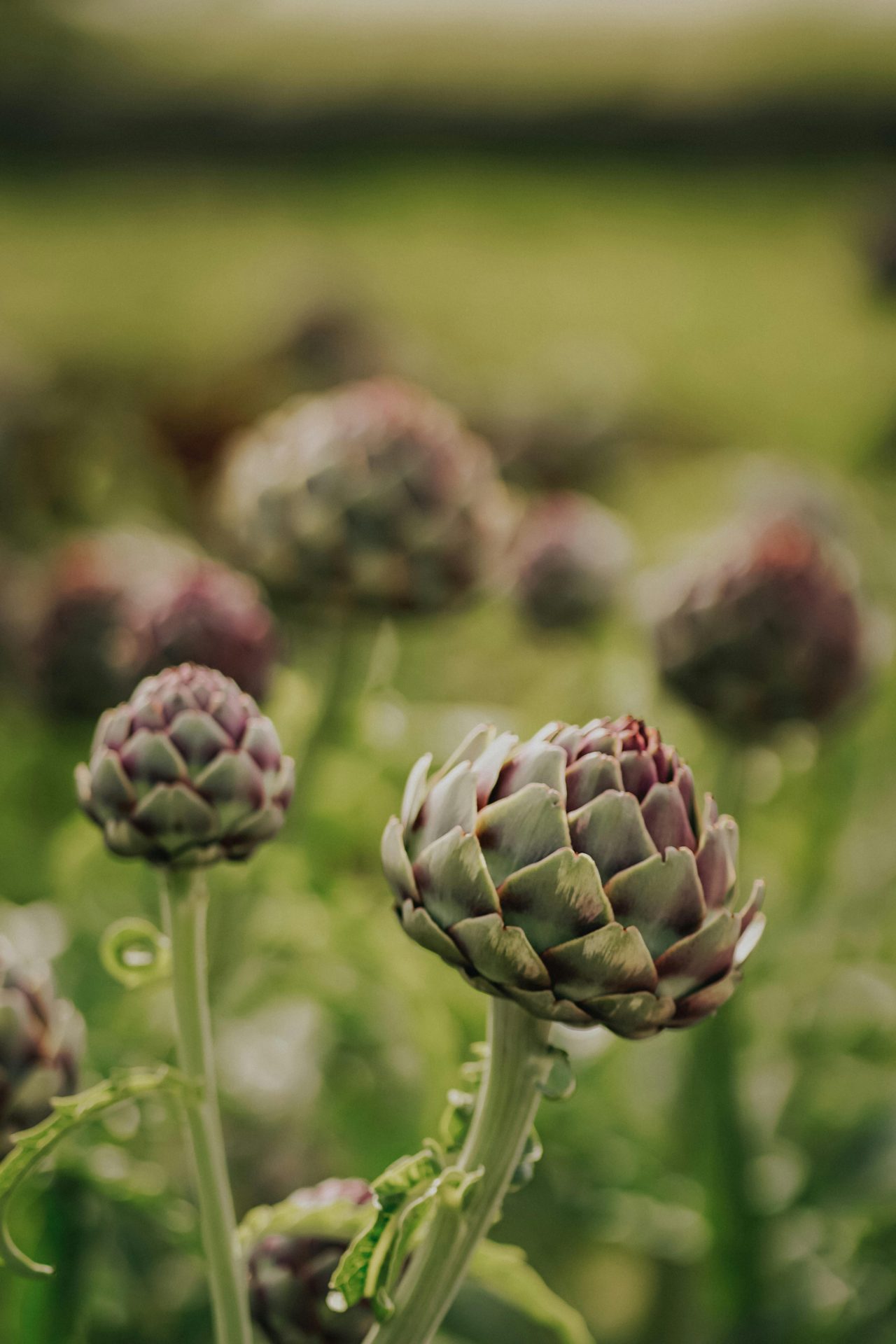
Dazzling amethyst-hued showstoppers…
Artichokes are a fabulous addition to the home garden, both as food and flower. Commercial growers stick to warmer climates, at least zone 7. A few years ago, I decided to try them in my own patch of earth in zone 6a. I started them early in a grow tent, and they did really well once I put them out in their place in the sun. But I didn’t know yet that they are perennial and in commercial cultivation they get 5-10 years of production. The next time I grew them I cut them back at the end of the season and heavily mulched them for the winter. Bada bing, bada boom! I had even more the next year.
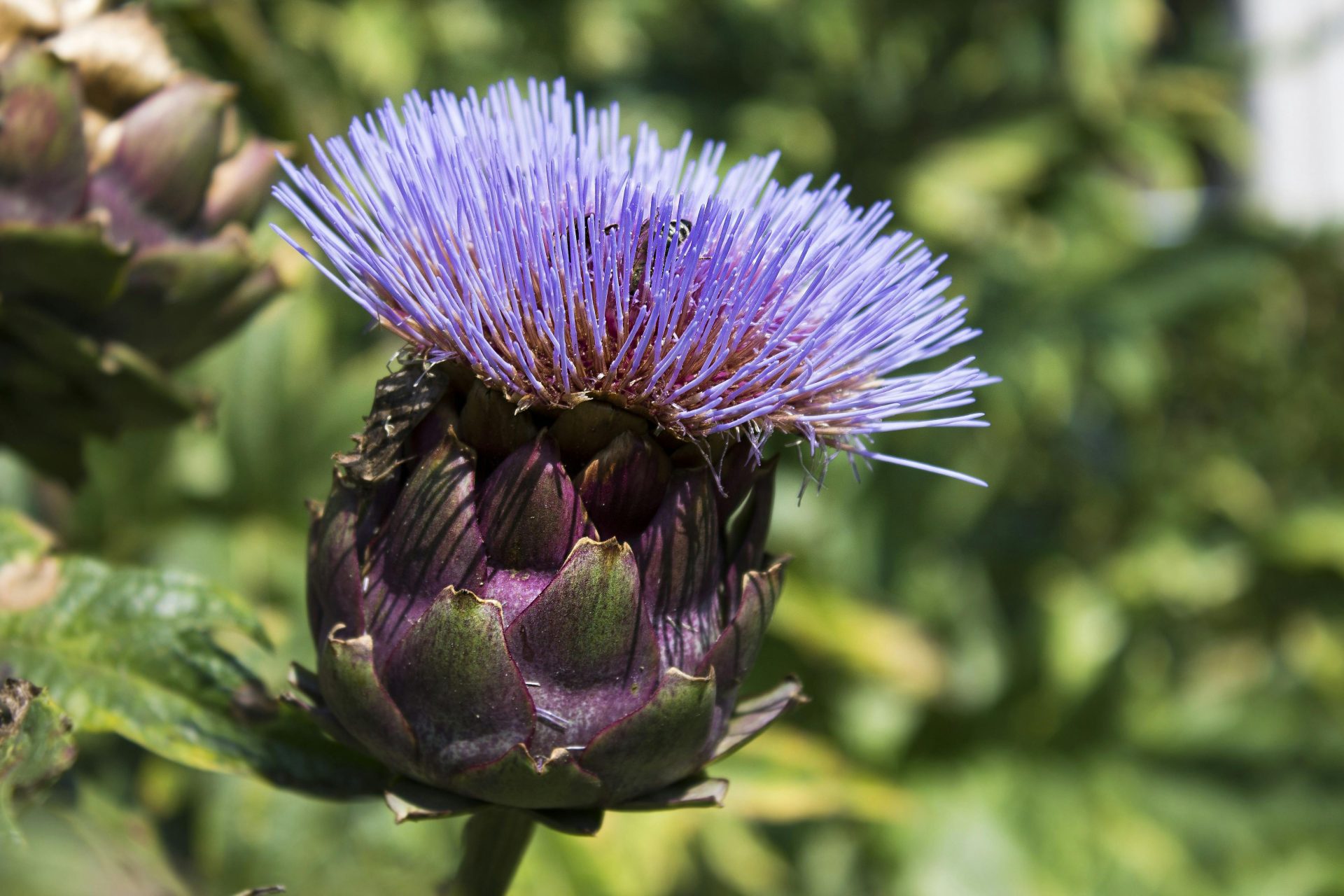
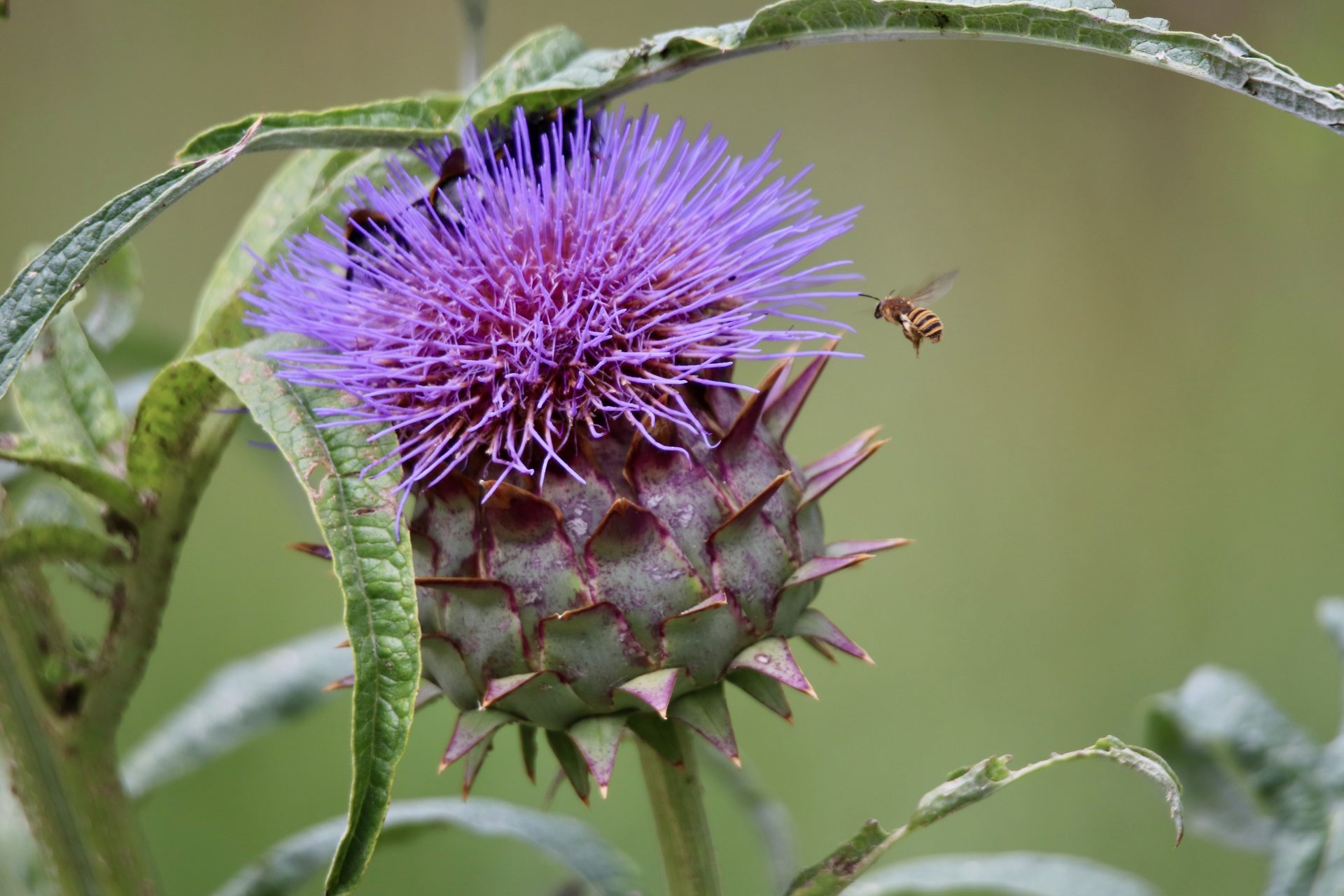
Though they are delicious they are incredibly valuable as food for our pollinator friends. If you let them go to bloom you will be gifted the peaceful hum of scores of bees. And they are so stunning that people will stop to ask about them. “Are those artichokes?” they ask, unfamiliar with them when they aren’t on a plate with melted butter. That’s my cue to convince them to join in the revolution—to add them to their own gardens and flower beds. I guarantee their mouths AND the bees will thank them.
Artichokes Have A Seedy Past…
One of my favorite tales about the artichoke is the story of Ciro Terranova “Whitey”. He was 1920’s mafia Artichoke King. He intersected shipments of the thistle from CA to NY where he sold it at a 30-40% profit. But gangsters being gangsters he wanted more and eventually his thugs, er, employees went straight to the fields with machetes and cut them thistles directly off the plants. There was an escalation in the Artichoke Wars. Blood was spilled. To nip it in the bud, so to speak, Mayor Fiorello LaGuardia made the precious produce an illegal commodity in New York.2
But in the end the mayor folded, admitting he couldn’t deny his own artichoke jones. He loved them so much he lifted the ban after only one week.
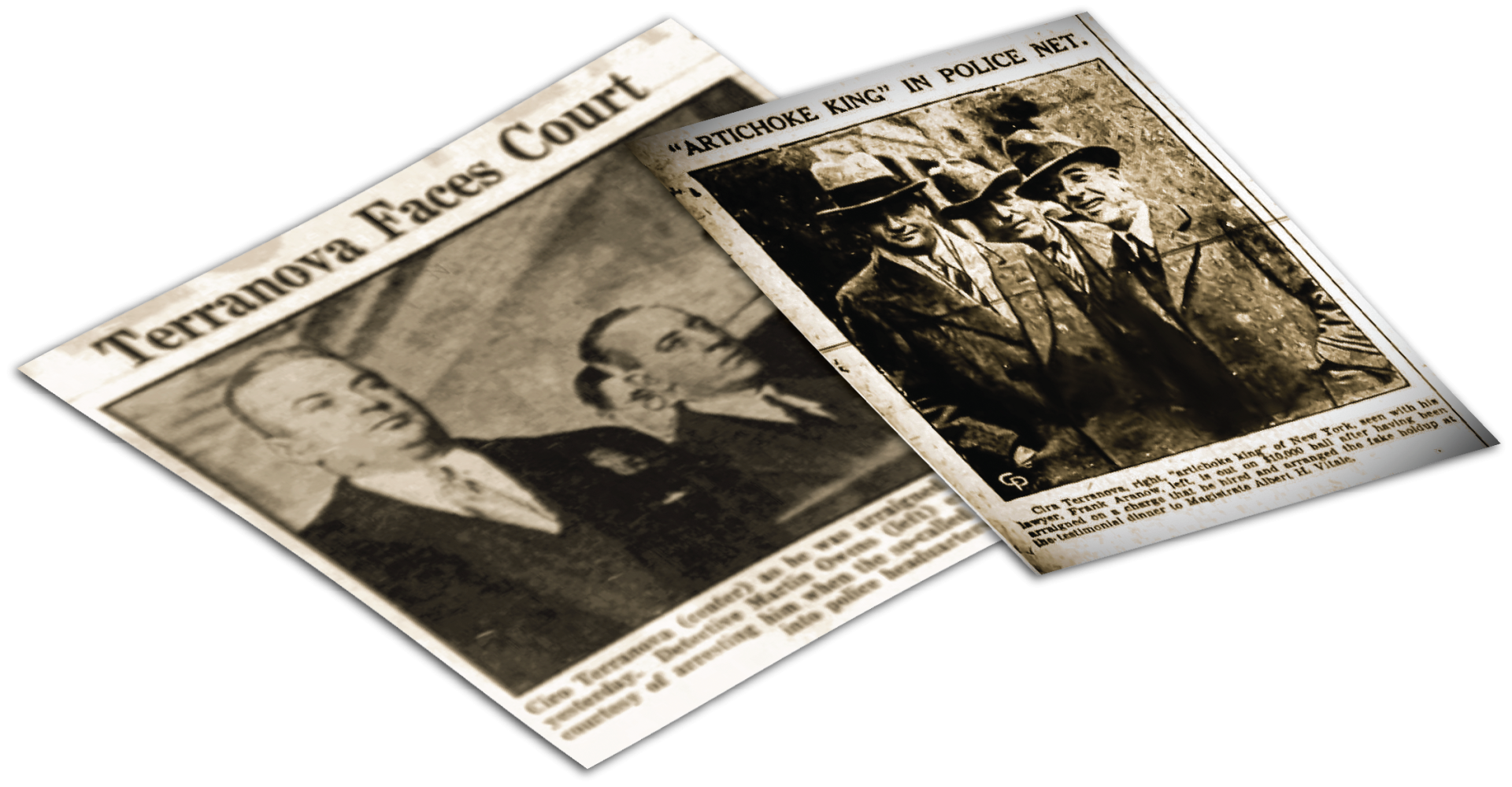
Newspaper clippings about Ciro Terranova – The Artichoke King
- WebMD Editorial Contributor. (2024, September 23). Health benefits of artichokes. WebMD. https://www.webmd.com/diet/health-benefits-artichokes
Note: Medically reviewed by K. M. Zelman. ↩︎ - What’s Cooking America. Accessed . [n.d.]. Artichokes History. https://whatscookingamerica.net/history/artichokehistory.htm [Online; accessed 14-April-2026] ↩︎